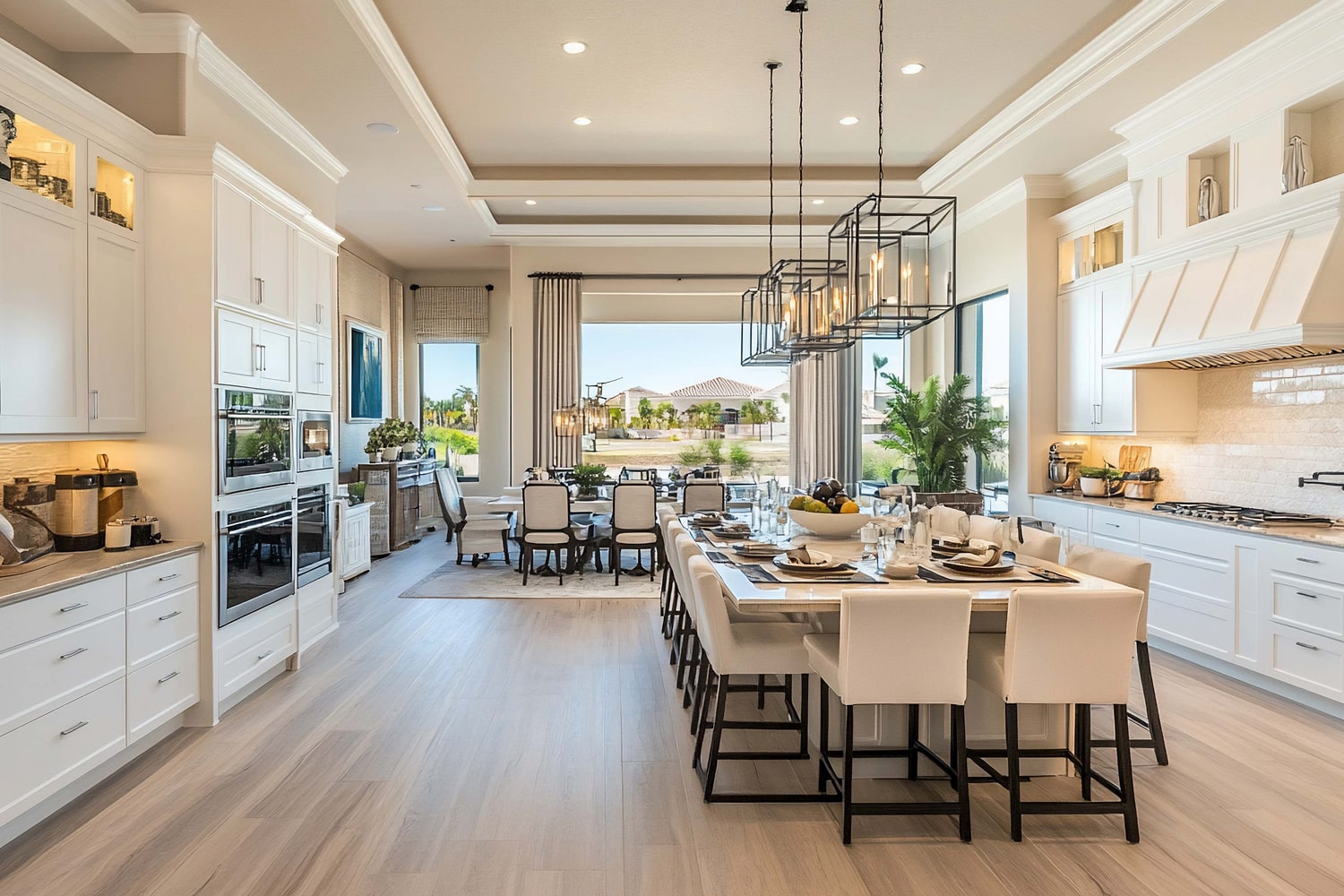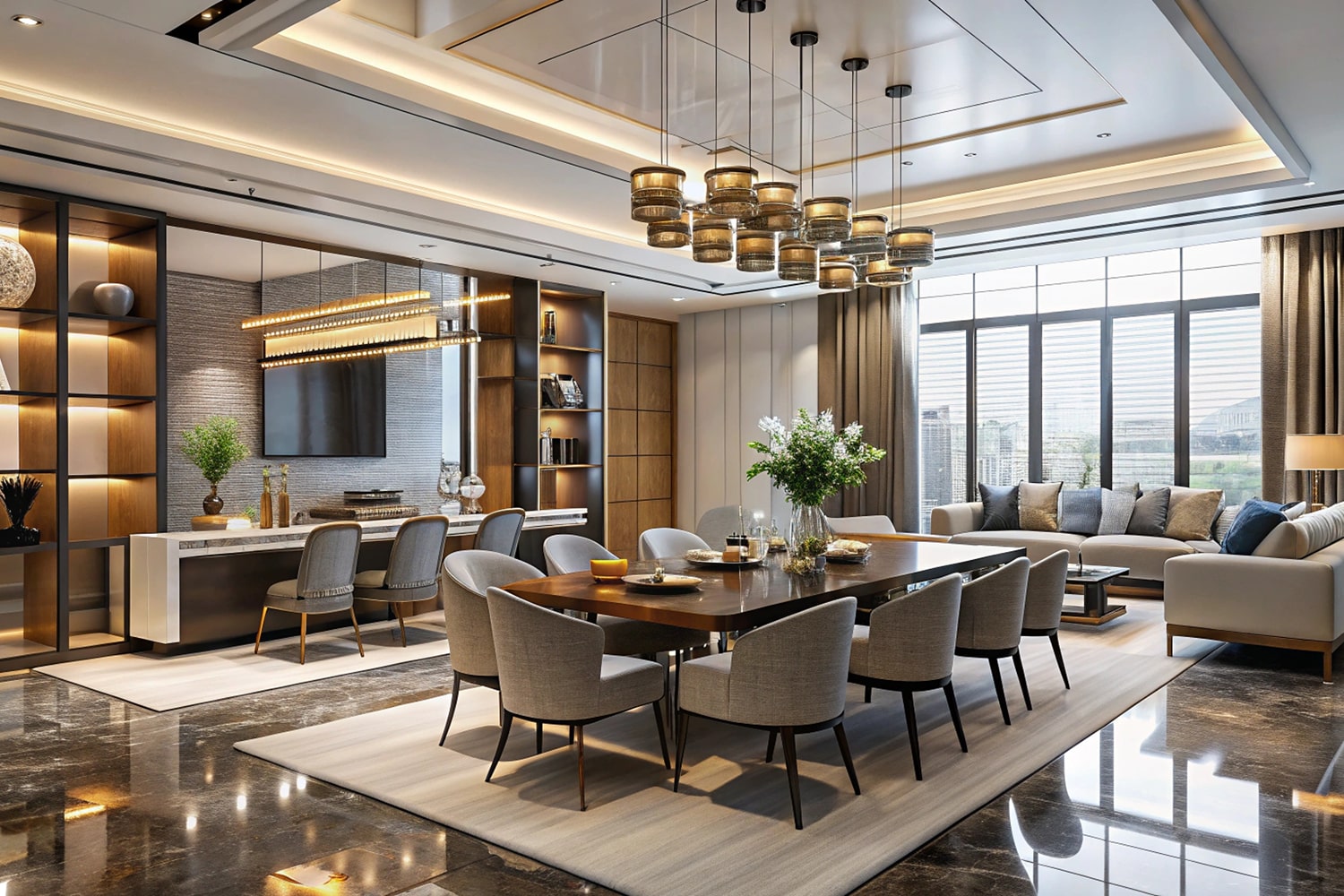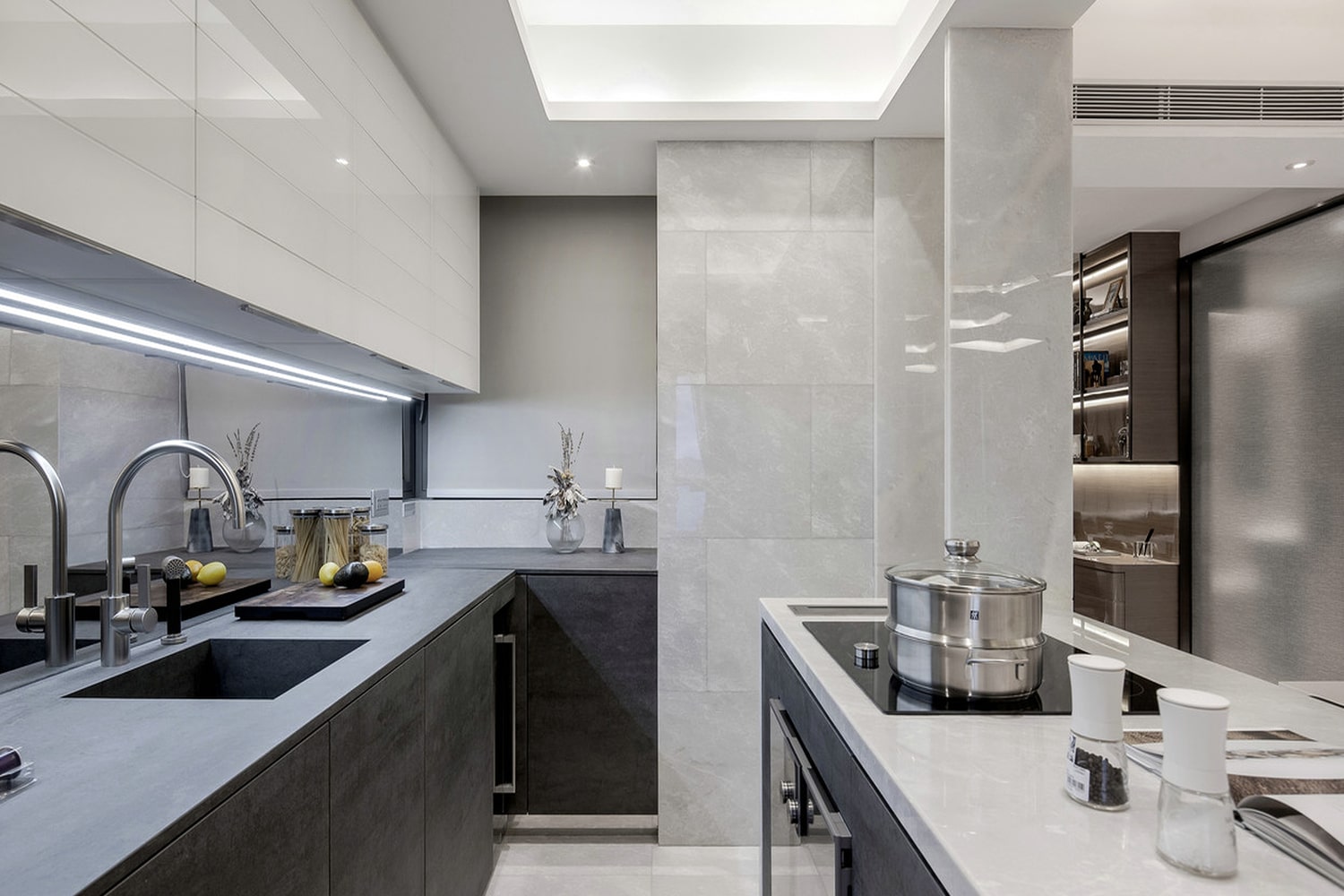

Dubai’s property market moves fast, and most owners don’t have time to manage five separate contractors for one renovation. Turnkey interiors in Dubai solve that specific problem: one company owns the entire project — design, approvals, construction, and handover — so you’re not the one chasing vendors or catching mistakes between trades.
This guide covers what “turnkey” actually means in practice, how turnkey renovations differ from a traditional project, what to check before hiring one of Dubai’s many turnkey fit-out companies, and what genuinely drives cost.
What “Turnkey” Actually Means in a Complete Interior Fit-Out
A turnkey interior fit-out is a single-contract service in which one company holds full responsibility — design, procurement, construction, MEP, and regulatory approvals — and hands the client a finished, move-in-ready space at the end.
The word comes from the idea that the client only has to “turn the key” on completion. In practice, a complete interior fit-out in Dubai typically bundles:
- Space planning and interior design
- 3D visualization and material selection
- Civil and structural modification work
- MEP (mechanical, electrical, plumbing) installation
- Joinery, flooring, ceilings, and finishes
- Permit and approval handling
- Single-point project management through to handover
The alternative — hiring a designer, a contractor, an MEP subcontractor, and a joinery workshop separately — puts the coordination risk on the property owner. Turnkey shifts that risk to the fit-out company.
Turnkey Renovations Dubai vs. Traditional Renovation
The distinction matters more than the marketing language suggests. Here’s the practical difference:
| Traditional renovation | Turnkey renovation (Dubai) |
Contracts | Multiple, one per trade | One, with the fit-out company |
Point of accountability | Split between vendors | Single company |
Permit handling | Usually the owner’s responsibility | Handled by the fit-out company |
Timeline risk | Owner absorbs delays between trades | Contractually owned by the fit-out company |
Design-to-build handoff | Often lost between designer and contractor | Continuous, same team |
Turnkey renovations in Dubai are generally the better fit for owner-occupied villas, apartments being fully reconfigured, and any commercial space where downtime has a real cost (a delayed retail unit or office isn’t just inconvenient — it’s lost revenue).
How to Choose Among Turnkey Fit-Out Companies in Dubai
Dubai has no shortage of firms advertising turnkey services. Since the entire value proposition is “we handle everything,” the questions that actually separate a reliable company from a risky one are:
- Which authority handles your approvals, and do they know it? A mainland villa, a JAFZA warehouse, and a unit in Dubai Design District go through different approval bodies. A company that can name the correct one for your project (Dubai Municipality for most mainland work, Trakhees for JAFZA/Palm Jumeirah/other TECOM- and Dubai World-governed zones, DDA within Dubai Design District, plus Dubai Civil Defence NOC for fire and life-safety systems) is telling you they’ve actually done this before, not just quoting a generic process.
- Is the trade license and scope verifiable? Ask for the DED (or relevant free-zone authority) trade license and confirm it covers general contracting/fit-out, not just interior design or trading.
- Do they show real, named projects — not just a stock gallery? A gallery of finished rooms tells you the finishes look good. It doesn’t tell you the company delivered on time, on budget, or handled a difficult site condition. Ask for 2–3 references you can actually call.
- Who owns delays? Get the delay-liability clause in writing before signing, not after.
- Is MEP done in-house or subcontracted? MEP is where most fit-out delays and defects originate. Companies that keep it in-house typically have tighter quality control than those subcontracting it out and managing it loosely.
If a company can answer all five clearly and specifically — not with a general “we handle everything, don’t worry” — that’s a genuine signal of experience, not just marketing language.
The Turnkey Fit-Out Process, Step by Step
A properly run turnkey project follows a consistent sequence:
- Consultation & site assessment — scope, budget range, and constraints (existing MEP, structural limitations, jurisdiction).
- Concept design — layout and material direction.
- 3D visualization & approval — client sign-off before anything is ordered.
- Permit submission — to the relevant authority identified above.
- Procurement — materials and finishes ordered against the approved design.
- Execution — civil, MEP, joinery, and finishing works in sequence.
- Quality check & snagging — defects identified and closed out before handover.
- Handover — keys, warranties, and as-built documentation delivered.
The steps that separate a good turnkey experience from a bad one aren’t the list itself — every company will show you roughly this sequence. It’s whether step 3 happens *before* procurement (avoiding costly mid-project changes) and whether step 7 is a real, documented process rather than a walkthrough.
Residential vs. Commercial Turnkey Interiors in Dubai
Residential turnkey fit-out — villas, apartments, penthouses — is typically design-led. The client’s priority is usually finish quality and how the space lives day to day, and timelines are flexible around the owner’s schedule.
Commercial turnkey fit-out — offices, retail, hospitality — is typically schedule-led. A retail unit or office has a fixed opening date or lease-cost clock running, and the fit-out company’s ability to hit that date, permit approvals included, matters more than any single finish decision. Commercial projects also carry additional compliance requirements (accessibility, fire-rated materials, civil defense sign-off) that a residential project usually doesn’t.
Ask which category a prospective company does more of — a firm that’s mostly done villas may not have the same civil-defense-approval track record a retail rollout needs, and vice versa.
Permits & Approvals: What a Turnkey Company Should Handle For You
This is the part most owners underestimate, and it’s exactly where a turnkey contract earns its premium over a piecemeal one.
Depending on your property’s jurisdiction, fit-out work in Dubai may require sign-off from:
- Dubai Municipality — for most mainland residential and commercial fit-out
- Trakhees — for properties under Dubai World / TECOM-governed free zones (e.g., JAFZA, some Palm Jumeirah developments)
- Dubai Design District (d3) Authority — for units within DDA-governed zones
- Dubai Civil Defence — NOC for fire alarm, suppression, and life-safety systems on any commercial or multi-occupancy fit-out
A genuine turnkey company identifies which of these applies to your specific unit before design even starts — not after drawings are submitted and rejected. If a company can’t tell you which authority governs your building in the first conversation, that’s worth asking about directly.
What Drives Cost in a Complete Interior Fit-Out (Dubai)
There’s no single “turnkey fit-out price per square foot” that means anything without context, but the real cost drivers are consistent:
- Scope of civil/structural change — moving walls and MEP routing costs more than a finishes-only refresh
- Material and finish grade — the single biggest swing factor in any quote
- MEP complexity — kitchens, bathrooms, and commercial kitchens/AV rooms disproportionately raise cost
- Custom joinery — bespoke wardrobes, kitchens, and millwork vs. standard units
- Approval complexity — a jurisdiction requiring multiple sign-offs (civil defense + Trakhees, for example) adds time and coordination cost, even before construction starts
A reliable turnkey quote breaks these out line by line rather than presenting one lump figure — that itemization is itself a useful test of how transparent the company will be once work starts.
FAQs
Is turnkey fit-out more expensive than hiring separate contractors?
Not necessarily. You’re paying for coordination and risk transfer, which often *saves* money by avoiding the delays and rework that happen when trades aren’t managed by one accountable party. The comparison only holds if you’d actually manage the separate contractors competently yourself.
How long does a typical turnkey renovation take in Dubai?
It depends heavily on scope and jurisdiction — a finishes-only apartment refresh and a full commercial fit-out with civil defense approval are not comparable timelines. Ask any prospective company for a project-specific schedule, not an industry average.
Do turnkey fit-out companies in Dubai handle permits for all property types?
A properly resourced one should, but the authority differs by location (see the permits section above). Confirm the company has direct experience with *your specific jurisdiction*, not just fit-out in general.
Can a turnkey company work within an existing structure without major civil works?
Yes — turnkey doesn’t require ground-up construction. Many turnkey renovations are finishes- and MEP-focused refreshes of an existing space.
Ready to scope your project? [Get a quote] or reach out via WhatsApp to talk through your space, timeline, and jurisdiction with our team.